


Tuna, Egg & Olive Empanadas are one of the most iconic and comforting dishes in Spanish cuisine. Golden, flaky, and packed with savory flavor, these traditional Spanish empanadas are especially popular in Galicia, where seafood-based fillings dominate local cooking. Simple ingredients, slow-cooked fillings, and olive-oil-rich dough make this recipe a timeless classic that has been passed down for generations.
In this guide, you’ll learn the history behind tuna empanadas, what makes them authentically Spanish, and how to make the perfect Tuna, Egg & Olive Empanadas at home using traditional methods and expert tips.
What Are Tuna, Egg & Olive Empanadas?
Tuna, Egg & Olive Empanadas are baked Spanish pastries filled with a flavorful mixture of tuna, hard-boiled eggs, olives, onions, peppers, and tomato. Unlike fried empanadas common in Latin America, Spanish empanadas are traditionally baked and often made as one large pie, then sliced into portions.
The combination of flaky dough and rich, savory filling makes these empanadas ideal for:
- Family meals
- Picnics and packed lunches
- Tapas and party platters
- Make-ahead meal prep
The Origins of Tuna Empanadas in Spain
Empanadas have been part of Spanish culinary history since the Middle Ages. The dish gained particular importance in Galicia, a coastal region in northwestern Spain known for its abundant tuna and sardine fisheries.
Historically, tuna empanadas were practical food for travelers and fishermen. The sealed dough preserved the filling, while olive oil and onions enhanced flavor and shelf life. Over time, the addition of hard-boiled eggs and olives became a signature feature, giving this empanada its unmistakable taste and texture.
Today, Tuna, Egg & Olive Empanadas remain one of the most popular empanada varieties across Spain.
Why This Traditional Spanish Empanada Recipe Works
What makes this recipe authentic and high-quality is its simplicity. Spanish cooking focuses on letting ingredients shine rather than overpowering them with spices.
Key Flavor Elements:
- Olive oil for richness
- Slow-cooked onions and peppers for sweetness
- Tomato sauce for depth
- Tuna for protein and umami
- Eggs and olives for texture and balance
Each component complements the others, creating a filling that is savory, slightly sweet, and deeply satisfying.
Ingredients for Tuna, Egg & Olive Empanadas
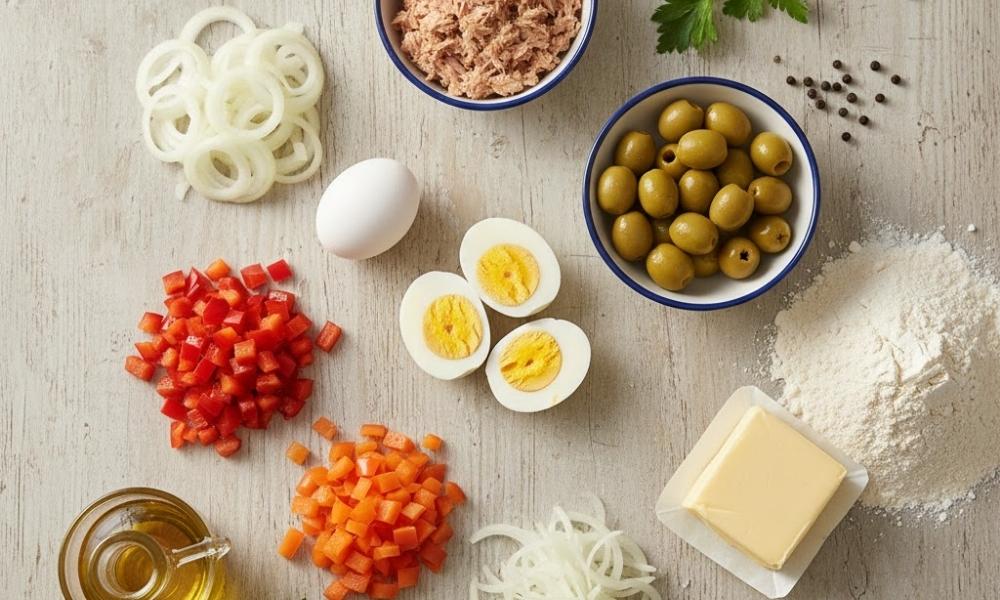
For the Filling:
- Canned tuna in olive oil
- Onions, finely chopped
- Red bell pepper, diced
- Tomato sauce or crushed tomatoes
- Hard-boiled eggs, chopped
- Green olives, sliced
- Extra virgin olive oil
- Sweet paprika
- Salt and black pepper
For the Empanada Dough:
- All-purpose flour
- Extra virgin olive oil
- Warm water or white wine
- Salt
Using olive oil instead of butter is essential for achieving a traditional Spanish empanada flavor and texture.
How to Make Traditional Tuna, Egg & Olive Empanadas
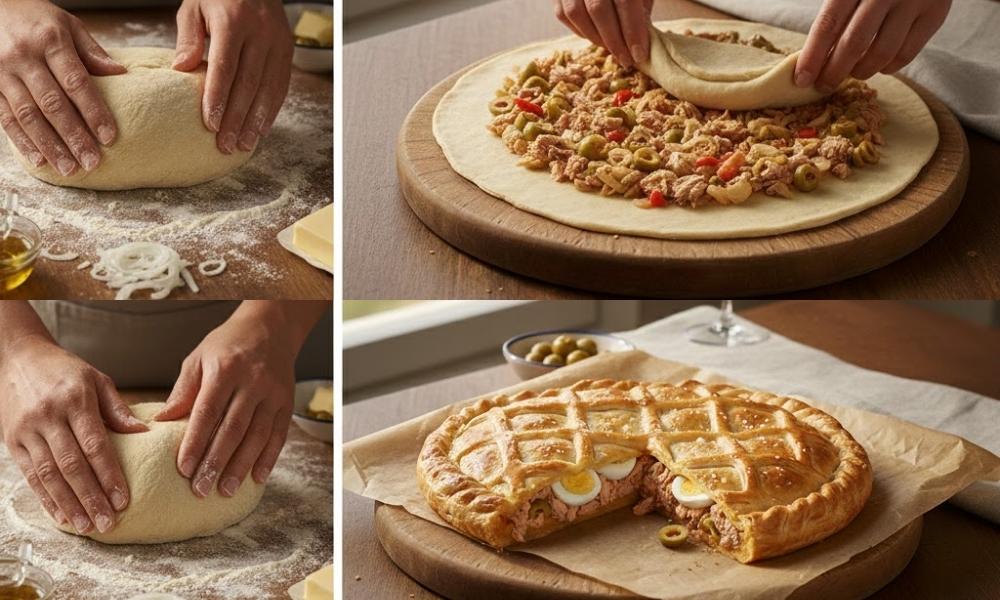
Step 1: Prepare the Filling
Heat olive oil in a pan and slowly sauté onions and bell peppers until soft and translucent. Add tomato sauce, paprika, salt, and pepper, then simmer gently. Stir in drained tuna and cook briefly. Remove from heat and allow the mixture to cool before folding in chopped hard-boiled eggs and olives.
Cooling the filling is crucial; it prevents soggy dough and helps maintain structure during baking.
Step 2: Make the Empanada Dough
Combine flour and salt in a bowl. Add olive oil and warm water or wine gradually, mixing until a soft dough forms. Knead until smooth and elastic, then cover and rest for at least 30 minutes.
Resting the dough relaxes the gluten, making it easier to roll and preventing shrinkage.
Step 3: Assemble the Empanadas
Roll out the dough thin. For a large empanada, place half the dough on a baking tray, spread the filling evenly, and cover with the remaining dough. Seal the edges tightly and cut small vents on top to release steam.
Step 4: Bake
Brush the empanada with beaten egg for a golden finish. Bake at 180°C (350°F) for 35–40 minutes, or until deeply golden and crisp.
Baked vs Fried Empanadas: Why Spanish Style Is Better
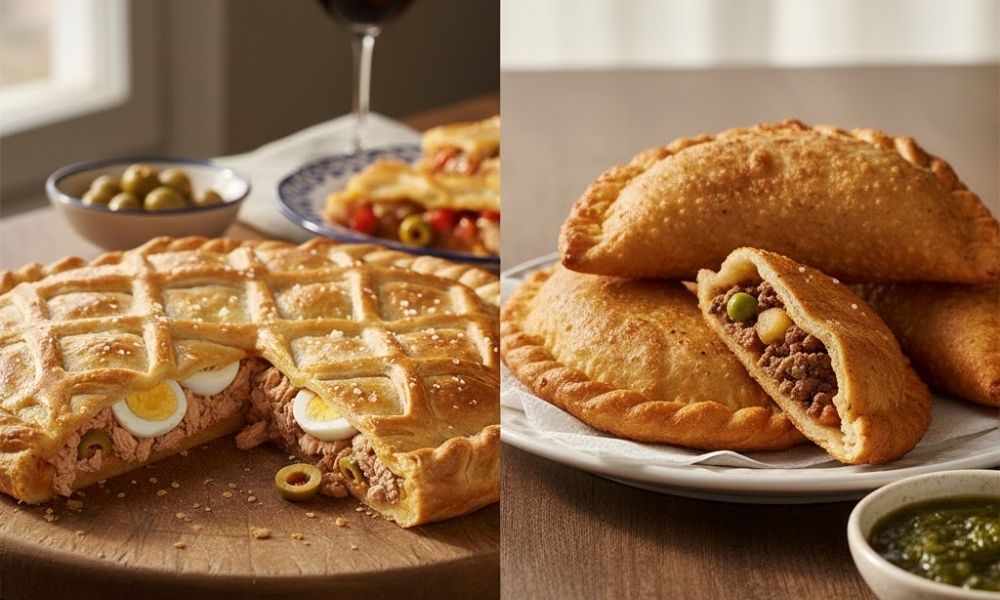
Traditional Spanish empanadas are always baked, not fried. Baking:
- Enhances olive oil flavor
- Creates a flaky yet tender crust
- Reduces excess oil
- Makes empanadas lighter and easier to digest
This method highlights the natural ingredients rather than masking them with grease.
Expert Tips for Perfect Tuna Empanadas
- Use quality tuna in olive oil for best flavor
- Do not overfill balance is key
- Let the empanada rest after baking for clean slices
- Use filling oil in the dough for extra authenticity
- Serve warm or at room temperature
Spanish empanadas actually taste better once flavors have settled.
How to Serve Tuna, Egg & Olive Empanadas
These empanadas are incredibly versatile and can be served:
- As a main dish with salad
- Cut into squares for tapas
- At picnics and gatherings
- As a make-ahead lunch option
They pair beautifully with fresh greens, roasted vegetables, or simple tomato salad.
Storage and Make-Ahead Tips
Tuna empanadas are perfect for meal prep:
- Refrigerate for up to 3 days
- Freeze baked or unbaked empanadas
- Reheat in the oven for best texture
Avoid microwaving, as it softens the crust.
Why Tuna, Egg & Olive Empanadas Are a Spanish Classic
This traditional Spanish empanada recipe has stood the test of time because it is:
- Affordable
- Nutritious
- Easy to customize
- Rich in cultural heritage
The balance of tuna, egg, and olives creates a filling that is satisfying without being heavy, making it suitable for any season or occasion.
Final Thoughts
Tuna, Egg & Olive Empanadas represent everything that makes Spanish cuisine special simple ingredients, careful preparation, and deep respect for tradition. Whether you’re recreating a taste of Spain or discovering empanadas for the first time, this classic recipe is a must-try.
With their golden crust and savory filling, these empanadas are more than just food they’re a celebration of Spanish culinary history.
